Engineering Journal
Case Study: Cold Storage ERP + WMS with FEFO for Frozen Shrimp Operations

Context
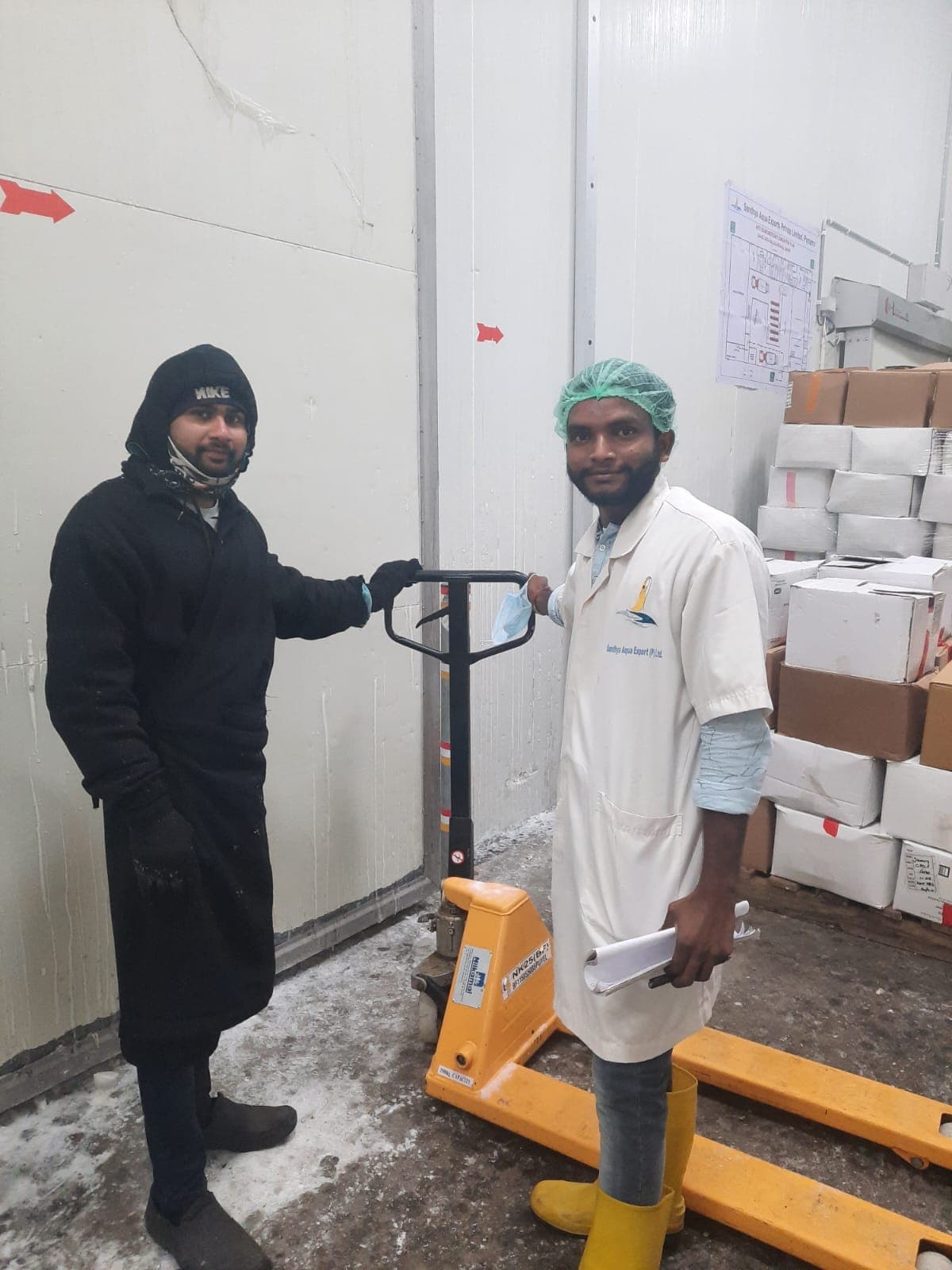
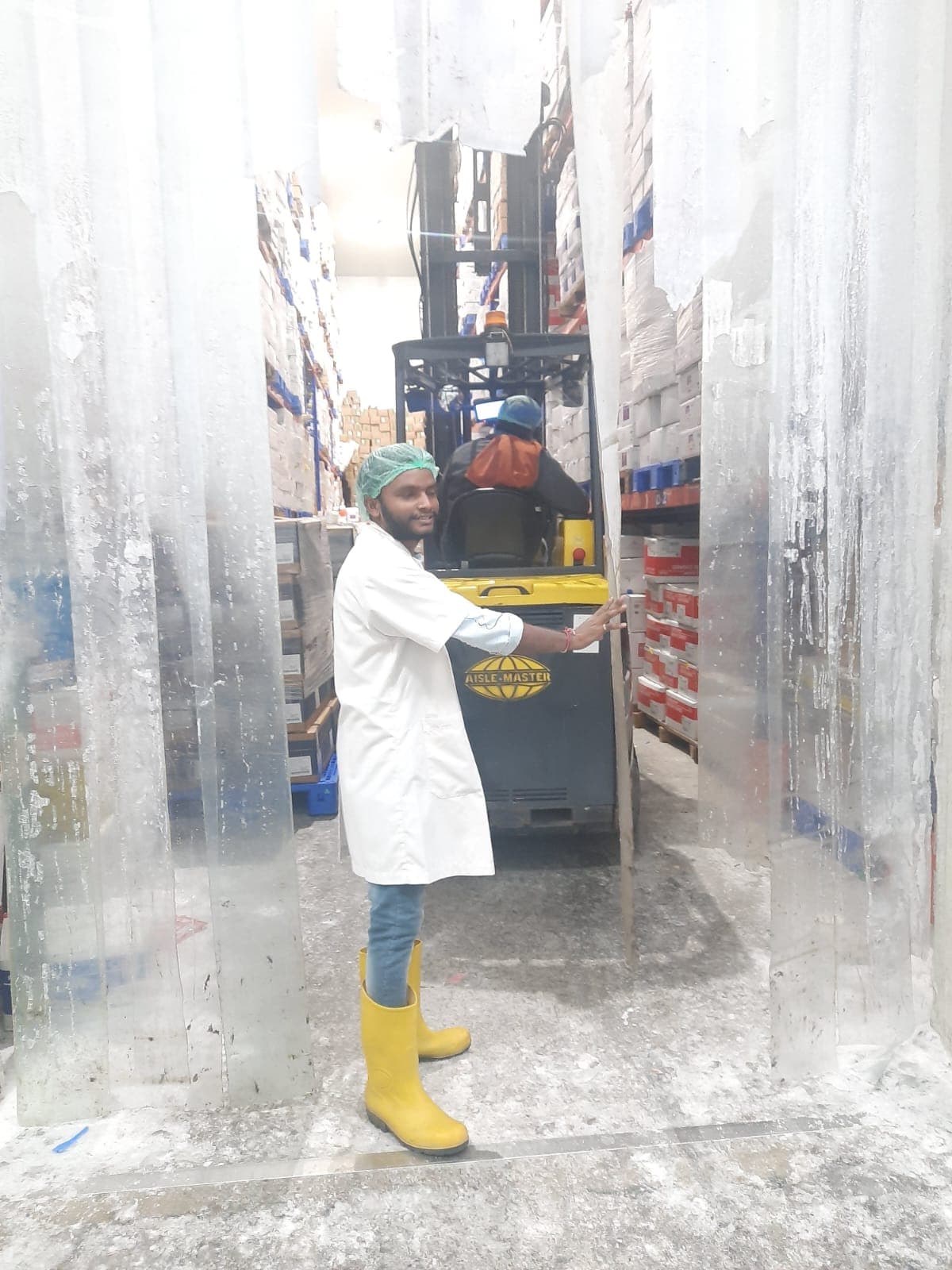
At Sandhya Aqua cold storage, processed shrimp inventory is maintained at around -18C before dispatch. This environment is very different from regular warehouses:
- Product quality is time and temperature sensitive.
- Inventory age directly impacts business value.
- Mistakes in stock movement and lot selection create hidden dead stock.
- Manual reconciliation causes recurring gaps between physical and system stock.
During onsite operations, one core inventory principle became central to the system design:
- FIFO (First In First Out) is useful.
- LIFO (Last In First Out) is sometimes used operationally.
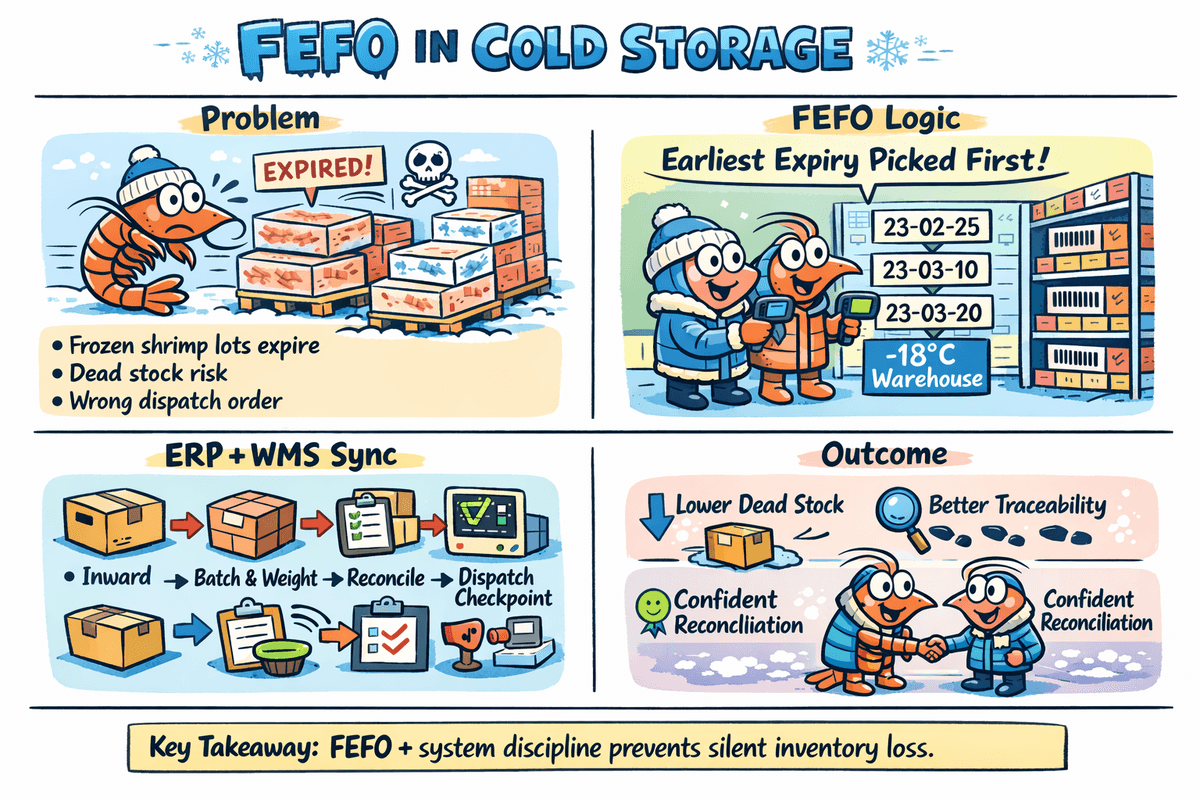
- But for perishables, FEFO (First Expiry First Out) is the control that protects both quality and profitability.
Problem
Before the solution maturity stage, operations faced predictable pain points:
- Lot/expiry-driven picking discipline was inconsistent.
- Dead stock accumulated due to delayed identification of near-expiry inventory.
- Weight reconciliation at each movement stage was not consistently tracked end-to-end.
- P&L impact of wastage and holding inefficiencies was visible only after delays.
- ERP and warehouse execution were not tightly synchronized for day-to-day decisions.
Objective
Implement a tightly integrated ERP + WMS operating model for frozen shrimp storage and movement that:
- Enforces FEFO at execution level.
- Tracks weight reconciliation across operational steps.
- Improves stock aging visibility and dead-stock prevention.
- Provides operational and financial insights for faster decisions.
What We Implemented
1. ERP + WMS Integrated Workflow
We implemented end-to-end process alignment between ERP transactions and warehouse execution states.
- ERP handled planning, accounting, and commercial control.
- WMS handled lot-level inventory authority, location control, and movement execution.
- Integration ensured no silent divergence between system intent and floor reality.
2. FEFO-Driven Allocation and Dispatch
We introduced FEFO as a practical execution rule, not just a reporting concept.
- Each lot carried expiry-aware attributes.
- Picking recommendations and validations were FEFO-prioritized.
- Exception handling was logged when non-FEFO picks were required for business reasons.
This directly reduced the probability of older lots getting stranded.
3. Weight Reconciliation Across Steps
Weight consistency was treated as a first-class control point.
- We captured weight checkpoints across inbound, internal movement, and dispatch stages.
- Reconciliation deltas were surfaced early instead of at period-close.
- Supervisors could investigate variance with transaction-level traceability.
4. Dead Stock and Wastage Insights
We built decision-oriented visibility for operations and management:
- Aging buckets for stock at risk.
- Lot-level movement velocity trends.
- Wastage-prone categories and process bottlenecks.
- Actionable indicators linked to business outcomes, not just raw logs.
5. P&L-Linked Operational Monitoring
Operational data was translated into financial relevance:
- Expiry risk and delay signals linked to potential value erosion.
- Faster identification of inventory that needed priority movement.
- Better planning inputs for procurement and dispatch decisions.
Results
The integrated model produced clear gains:
- Significant reduction in dead-stock build-up through FEFO discipline.
- Better control over wastage drivers through earlier visibility.
- Improved reliability of weight reconciliation across process stages.
- Stronger trust in inventory and operational reports.
- Better alignment between floor execution and business-level profitability monitoring.
Practical Lesson
In perishable cold-chain operations, warehouse success is not only about storing stock correctly. It is about moving the right lot at the right time with disciplined data controls.
FEFO + reconciliation + ERP/WMS integration is what turns cold storage from a static inventory space into a measurable, decision-ready operation.